
A Complete Guide to LPG Cylinder Standards and Certifications Worldwide
LPG (Liquefied Petroleum Gas) cylinders are core pressure-bearing safety equipment widely used in residential, commercial, industrial, and automotive energy scenarios worldwide. As a high-risk pressure vessel that stores flammable and explosive gas, the quality, performance, and safety of LPG cylinders are directly related to personal safety, property security, and industrial standardized operation. Global LPG cylinder production, sales, and circulation are strictly constrained by unified and regional standardized systems and certification mechanisms. Understanding worldwide LPG cylinder standards and certifications is essential for manufacturers, distributors, and end users to ensure product compliance, market access, and long-term operational safety. This guide comprehensively sorts out the core value of industry standards, global market differentiated requirements, key certification fields, and full-process compliance specifications for design, production, and testing, providing authoritative reference for global business layout and product selection.
1. Why LPG Cylinder Standards and Certifications Are Indispensable
Global unified and localized LPG cylinder standards and certification systems form the bottom line of safety and quality for the entire industry, with irreplaceable strategic and practical significance. First, safety risk prevention: standardized specifications strictly control the pressure resistance, material toughness, sealing performance, and anti-corrosion capability of cylinders, effectively avoiding safety accidents such as cylinder rupture, gas leakage, explosion, and fire caused by unqualified design, rough manufacturing, and substandard materials. Second, unify industry quality benchmarks: standardized systems eliminate the chaos of uneven product quality in the market, unify technical parameters, production processes, and safety indicators, and standardize the industry development order. Third, support global market circulation: standardized certification is the core passport for cross-border sales of LPG cylinders, realizing product mutual recognition and free circulation between different countries and regions. Fourth, extend product service life: compliant design, manufacturing, and testing can effectively resist environmental erosion, pressure fatigue, and daily wear, ensuring the long-term stable operation of cylinders and reducing replacement and maintenance costs for users. Finally, regulate industrial supervision: official standards and certification systems provide clear basis for government market supervision, quality inspection, and safety law enforcement, realizing standardized and institutionalized industry management.
2. Global Differentiated Market Requirements for LPG Cylinders
Due to differences in regional industrial foundations, safety supervision systems, climatic environments, and usage scenarios, countries and regions around the world have formulated targeted differentiated access requirements for LPG cylinders, forming a pattern of "global general standards + regional special specifications".
European Market: The EU adopts unified EN series standards as the core access threshold, mainly including EN 1442 (standard for portable LPG cylinders) and EN 1396 (welded steel LPG cylinder specifications). All products entering the EU market must obtain CE certification, with strict requirements on cylinder weight tolerance, wall thickness uniformity, low-temperature resistance, and cyclic pressure resistance, and mandatory regular batch sampling inspection.
North American Market: The United States and Canada take DOT (Department of Transportation) standards and CSA standards as the core. DOT 4BW and DOT 4BA are the mainstream specifications for steel LPG cylinders, with extremely high requirements for material strength, impact resistance, and high-pressure bearing performance, and implement strict factory audit and annual supervision mechanisms for manufacturers.
Asian Market: Asian countries have obvious differentiated requirements. China implements GB 5842 national mandatory standards, with strict specifications for cylinder design, manufacturing, inspection, and service life management; India follows IS 3196 standards, adapting to high-temperature and humid local environments and putting forward higher requirements for cylinder anti-corrosion performance; Japan and South Korea adopt JIS and KS standards respectively, with refined requirements for product precision, appearance quality, and lightweight design.
Middle East, African and South American Markets: Most emerging markets adopt international ISO standards or recognize European and American certification systems. At the same time, combined with local high-temperature, high-humidity, and corrosive usage environments, they add special technical requirements for anti-rust, anti-aging, and high-pressure resistance, and have flexible but strict product filing and certification access mechanisms.
3. Core Certification Areas for Global LPG Cylinders
LPG cylinder certification covers the full life cycle of product design, production, testing, sales, and after-sales, involving multiple authoritative certification bodies and multi-dimensional assessment fields, which are core guarantees for product market compliance.
International Standard Certification: ISO 4706 is the core international general standard for reusable steel LPG cylinders, specifying unified technical requirements for global product design, materials, and testing, and is widely recognized in most countries. ISO 11439 targets high-pressure LPG cylinders for automotive use, covering special scenarios of vehicle-mounted dynamic use.
Regional Safety Certification: Including EU CE/PED pressure vessel certification, US DOT certification, Canadian CSA certification, Chinese GB compulsory certification, Indian BIS certification, Japanese JIS certification, etc. Such certifications are mandatory market access qualifications, and products without certification are prohibited from local sales and use.
Production System Certification: Manufacturer's ISO 9001 quality management system certification, ISO 14001 environmental management system certification, and OHSAS 18001 occupational health and safety management system certification. These certifications assess the standardized production capacity and stable quality control level of enterprises from the source of production.
Special Performance Certification: Including low-temperature resistance certification, high-temperature aging resistance certification, anti-corrosion performance certification, cyclic fatigue pressure resistance certification, and explosion-proof safety certification, aiming at special usage environments and extreme working conditions to verify product safety and stability.
4. Global Standard Compliance for Cylinder Design
Design compliance is the first link of LPG cylinder quality assurance, and all design parameters must strictly match the mandatory requirements of target market standards to eliminate inherent safety hazards. In terms of material design, mainstream standards clearly specify the types of high-quality low-carbon steel and alloy steel for cylinders, requiring excellent ductility, impact resistance, and pressure resistance, and prohibiting the use of recycled materials and unqualified raw materials. In terms of structural design, standardize cylinder wall thickness, bottom and head arc transition structure, valve interface specification, and handle fixing structure, ensuring uniform pressure bearing of the cylinder body and avoiding stress concentration and local deformation. In terms of parameter design, accurately calibrate the nominal working pressure, test pressure, burst pressure, and filling volume of the cylinder, and carry out targeted design according to regional environmental differences (low-temperature resistance for European and American cold regions, anti-corrosion design for coastal humid and corrosive regions). In addition, the design must reserve safety protection structures such as pressure relief devices and anti-overfilling structures, and complete design verification and simulation analysis to ensure that the design scheme fully meets the requirements of target market standards.
5. Strict Manufacturing Process Control Specifications
Standardized design needs to be implemented through strict manufacturing process control, and global industry standards put forward full-process standardized requirements for LPG cylinder production links to ensure batch product quality consistency. First, raw material incoming inspection control: all steel plates, accessories, and valve parts must pass component analysis, mechanical performance testing, and quality certificate verification, and unqualified raw materials are strictly prohibited from entering the production line. Second,key process standardization: strictly standardize stamping, rolling, welding, heat treatment, and surface treatment processes. Welding is the core key process, requiring the use of automatic welding equipment, fixed welding parameters, and regular verification of welders' qualifications to ensure weld compactness and no defects. Heat treatment processes are standardized to eliminate internal stress of the cylinder body and improve material stability and fatigue resistance. Third, in-process quality inspection: set up multi-point inspection nodes in the production process, conduct real-time detection of cylinder size, wall thickness, weld quality, and forming effect, and eliminate defective products in time. Fourth, surface protection control: follow standard requirements for shot blasting, rust removal, electrostatic spraying, and paint curing to ensure uniform and firm surface coating, effectively resisting oxidation and corrosion. Fifth, batch production management: implement strict batch traceability management, record all production parameters and inspection data, realize full-process traceability of products, and meet the audit requirements of global certification bodies.
6. Mandatory Testing Requirements for Global Compliance
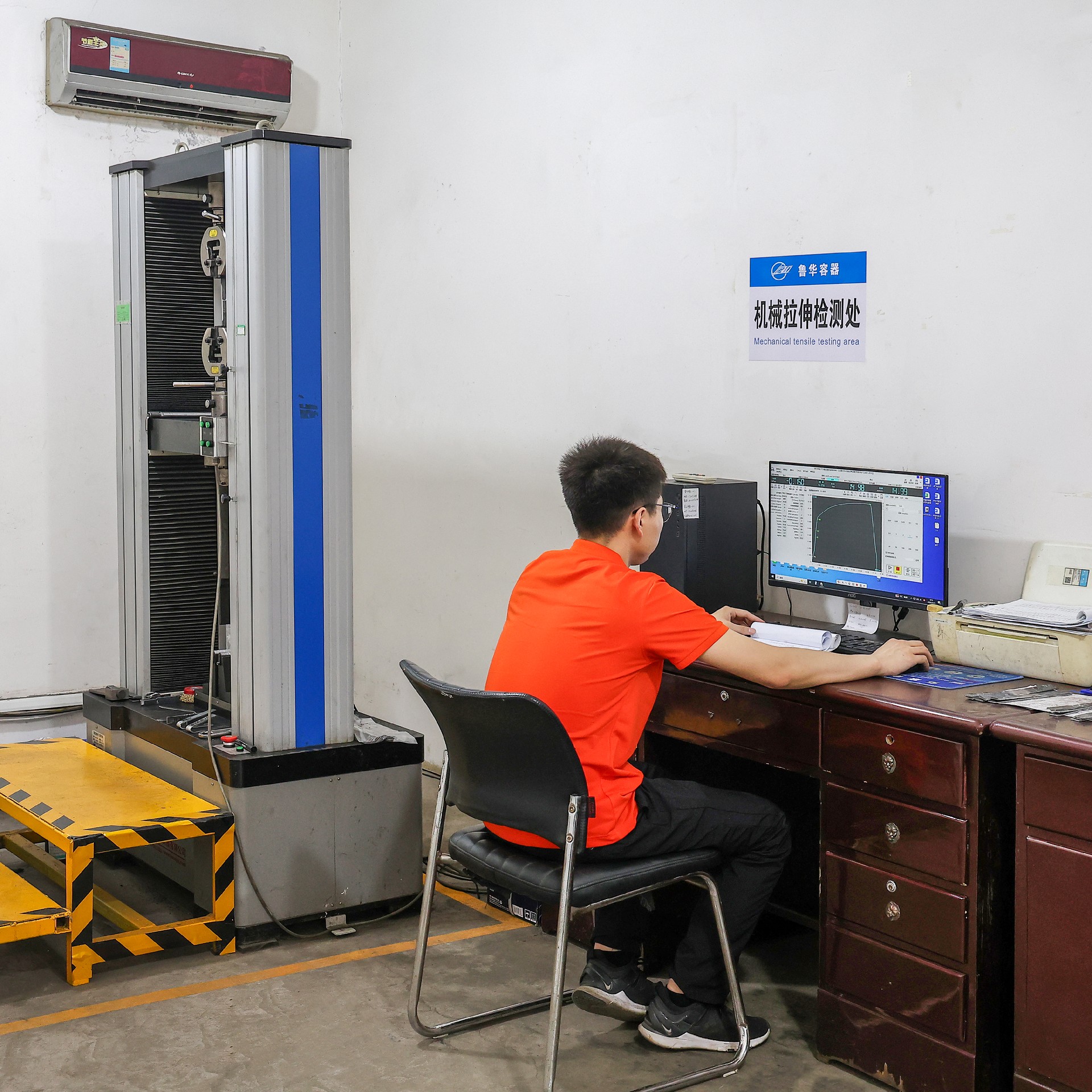
All LPG cylinders sold on the global market must pass strict standard testing, including factory routine testing, periodic sampling testing, and third-party certification testing, covering all safety performance indicators. Hydraulic pressure test: the core routine test, which pressurizes the cylinder to the standard specified test pressure and maintains pressure for a certain time to verify that the cylinder has no deformation, leakage or damage under ultra-working pressure. Air tightness test: fill the cylinder with compressed air or inert gas, conduct bubble detection or pressure holding detection to ensure zero gas leakage in the cylinder body, welds, and valve interface. Burst pressure test: conduct destructive sampling test on batch products to verify that the actual burst pressure of the cylinder is far higher than the nominal working pressure, ensuring extreme pressure resistance. Fatigue cycle test: simulate the repeated filling and pressure relief process of the cylinder during long-term use, test the structural stability of the cylinder after thousands of cycles, and verify the service life reliability. Low-temperature impact test: test the impact resistance of the cylinder material in low-temperature environments to avoid brittle fracture of the cylinder in cold regions. Appearance and size detection: strictly detect the overall dimension, wall thickness uniformity, surface coating quality, and marking clarity of the cylinder to ensure compliance with standard specifications. All test data will be archived permanently as the core basis for product certification and market access.
7. Core Advantages of Choosing Experienced Professional LPG Cylinder Manufacturers
In the global standardized and certificated LPG cylinder market, choosing a manufacturer with rich industry experience and complete qualification system is the key to ensuring product compliance, safety and stable supply. First, full global standard adaptation capability: experienced manufacturers are familiar with the differentiated access standards and certification requirements of major global markets such as Europe, America, Asia, Africa and Latin America, can customize design and production according to target regions, and effectively avoid product non-compliance and market access obstacles. Second, mature standardized production system: after years of process accumulation, professional manufacturers have formed standardized and refined production management processes, with strict control over raw materials, processes and testing, ensuring stable and consistent batch product quality. Third, complete qualification certification: formal experienced manufacturers have obtained ISO international standard certification, regional mandatory market access certification and factory system certification, with complete product qualification documents, which can support customers' global market sales and supervision inspection. Fourth, strong technical R&D and customization capability: with professional technical teams, they can adapt to special working conditions and environmental requirements in different regions, optimize product structure and performance, and provide personalized customized solutions. Fifth, perfect quality traceability and after-sales system: realize full-life cycle product quality traceability, provide professional compliance consulting, certification assistance and after-sales maintenance services, helping customers reduce market operation risks and improve market competitiveness.
Conclusion
Global LPG cylinder standards and certifications are systematic engineering covering safety, quality, design, production and market access. With the continuous improvement of global industrial safety supervision, product standardization and certification compliance have become the core competitiveness of the LPG cylinder industry. In-depth understanding of differentiated requirements of global markets, strict compliance with international and regional standard specifications, and cooperation with qualified and experienced professional manufacturers are not only the basic guarantee of product safety, but also the key to steadily expanding the global market and realizing long-term sustainable development.
Prev:The difference between propane cylinders and lpg cylinders
Next:High-Quality 50KG LPG Cylinders Supporting Nigeria’s Growing Energy Demand