
LPG Cylinder Welding Technology: Answering Key Questions from Buyers
1. What determines the long-term durability and leak resistance of a cylinder?
The core factor is the integrity of its circumferential welds — the critical joints connecting the cylindrical shell to the end caps, which bear the primary pressure load during service. At Luhua Container, we employ advanced automated welding systems to achieve high precision and process consistency, ensuring uniform weld quality across all production batches. Our 10 automated production lines are equipped with smart automated welding equipment, enabling us to maintain strict control over every weld — free from porosity, slag inclusion, undercutting, and other common defects. This creates a uniform, high-strength bond that forms the primary reliable barrier against internal pressure over the cylinder's entire service life — directly translating to greater durability and leak resistance.
2. How does your welding method provide a stronger seal?
For our DOT-certified 20lb LPG cylinder, we apply internal-external double-sided welding — a technique that enhances joint integrity and is well-matched to the design requirements of this model certified to DOT 48A standard. By reinforcing the weld from both sides, we improve resistance to fatigue and cyclic stress, resulting in a more robust and reliable seal. This approach, implemented on our dedicated production lines, greatly reduces long-term leakage risks, extends service life, and delivers clear safety and economic value to our customers.
3. How do you verify and guarantee the quality and safety of every cylinder?
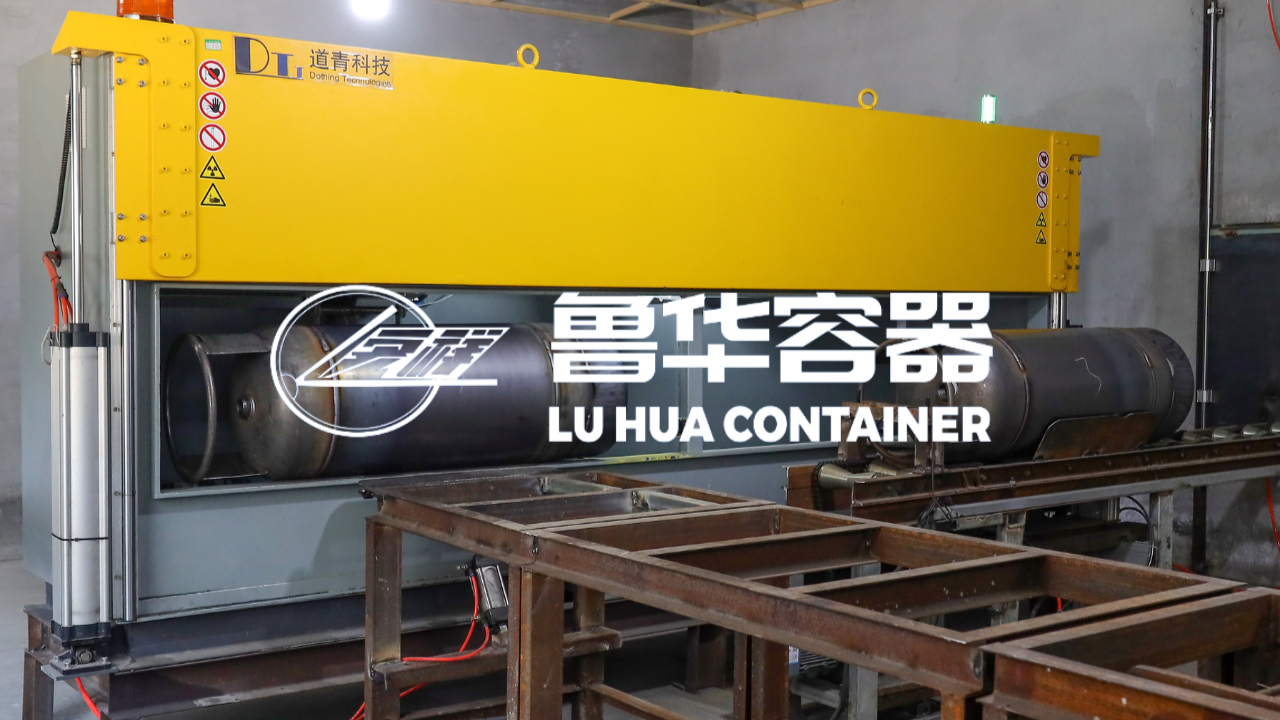
We follow a rigorous, multi-stage inspection protocol in full compliance with applicable international standards including ISO 4706, EN 1442, and DOT 48A. Our quality verification system is supported by advanced testing equipment, including an X-ray digital imaging system, and includes:
Hydrostatic Test: Every cylinder is subjected to a hydrostatic pressure test to verify its strength and structural integrity under specified pressure conditions.
Radiographic Test (X-ray): Representative samples from each production batch undergo radiographic inspection using our digital imaging system to detect internal weld defects and ensure sound fusion.
Burst Test: Destructive burst testing is carried out on a batch sampling basis to validate the ultimate pressure resistance and failure characteristics of the cylinder.
100% Leak Test: Every single cylinder undergoes a complete leak test to ensure absolute sealing performance before leaving the factory.
This systematic and standards-based approach, backed by our investment in advanced inspection equipment, provides clear, verifiable proof of quality and safety — giving our customers confidence they can rely on.
4.Have questions? We're here to help.
Our team of experienced engineers and technical specialists is always ready to discuss your LPG cylinder needs — whether it's about welding processes, certification requirements, or custom specifications. No obligation, just straight answers from people who know the product inside out. Contact us anytime.
Prev:The difference between propane cylinders and lpg cylinders
Next:High-Quality 50KG LPG Cylinders Supporting Nigeria’s Growing Energy Demand